A century-old brand’s moat was never in the driver
Decoding the Yamaha paradox: a case study that took three decades to prove a brand can outlast a generation of technology, and the warning it carries for new entrants.
Related footage
These files are large — they only start downloading once you press play.
Yamaha’s path in audio is unusual: it never led in driver technology for long, yet it almost never fell behind on any generation of product. The reason is not engineering — it is that Yamaha kept treating manufacturing capability and channel capability as part of the product.
For a new entrant this is a warning: if your advantage exists only in technology, while your delivery format, channels and price structure are identical to everyone else’s, then every generational turnover forces you to prove yourself again from scratch.
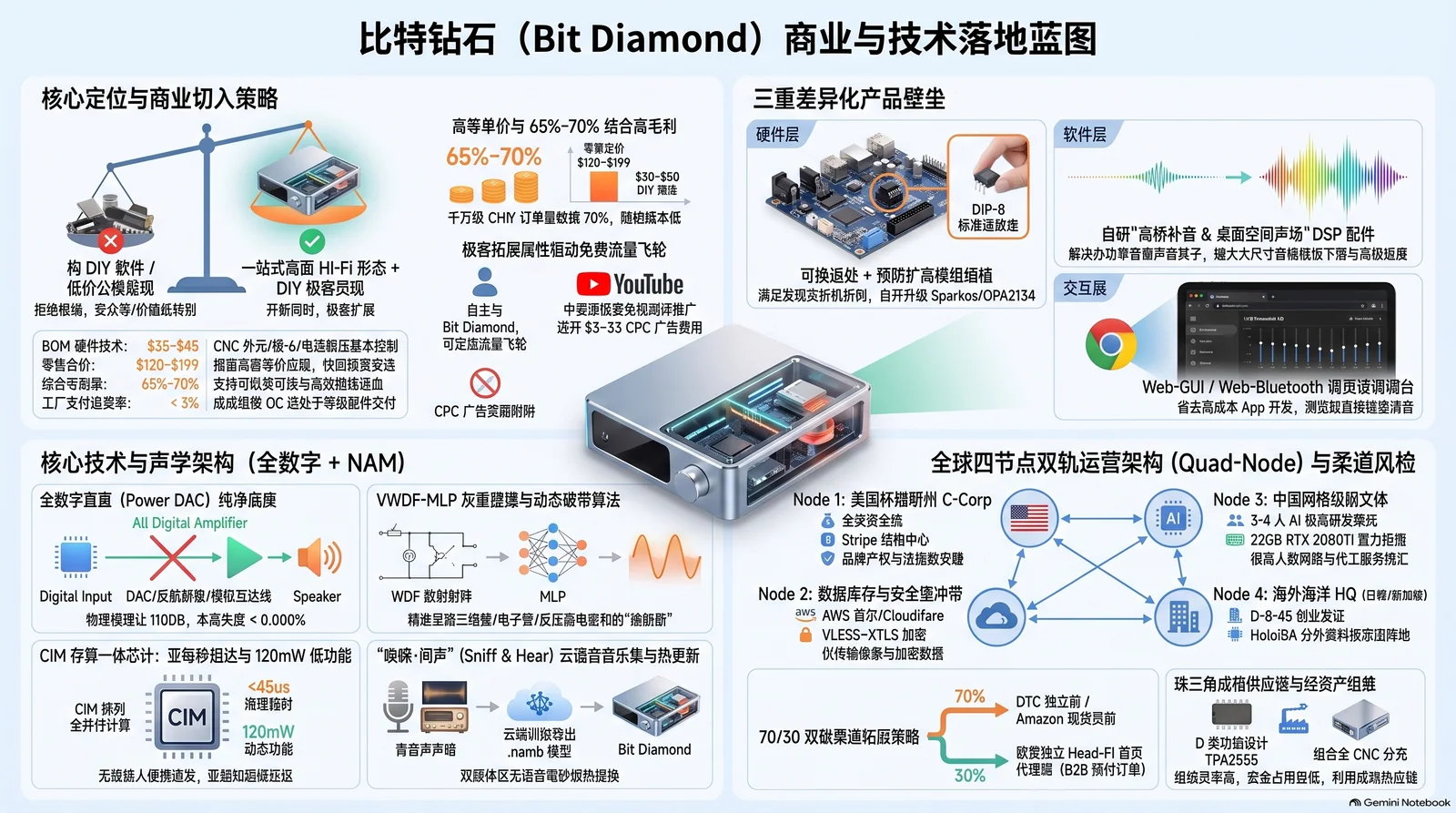
The structure BitDiamond chose is a 70/30 two-track channel mix — seven tenths through the DTC standalone site and Amazon, three tenths through Head-Fi channel agents. Combined with modular hardware on standard DIP-8 sockets, unit cost is held between $35–$45 and retail between $120–$199, which leaves 65%–70% gross margin to fund research and development.
In other words, technology is not the moat — the commercial structure that lets technology keep iterating is.
Want this system in your room? Book a controlled listening session.
Book a listening session