EESM Coaxial Transducer
A driver taken apart and looked at
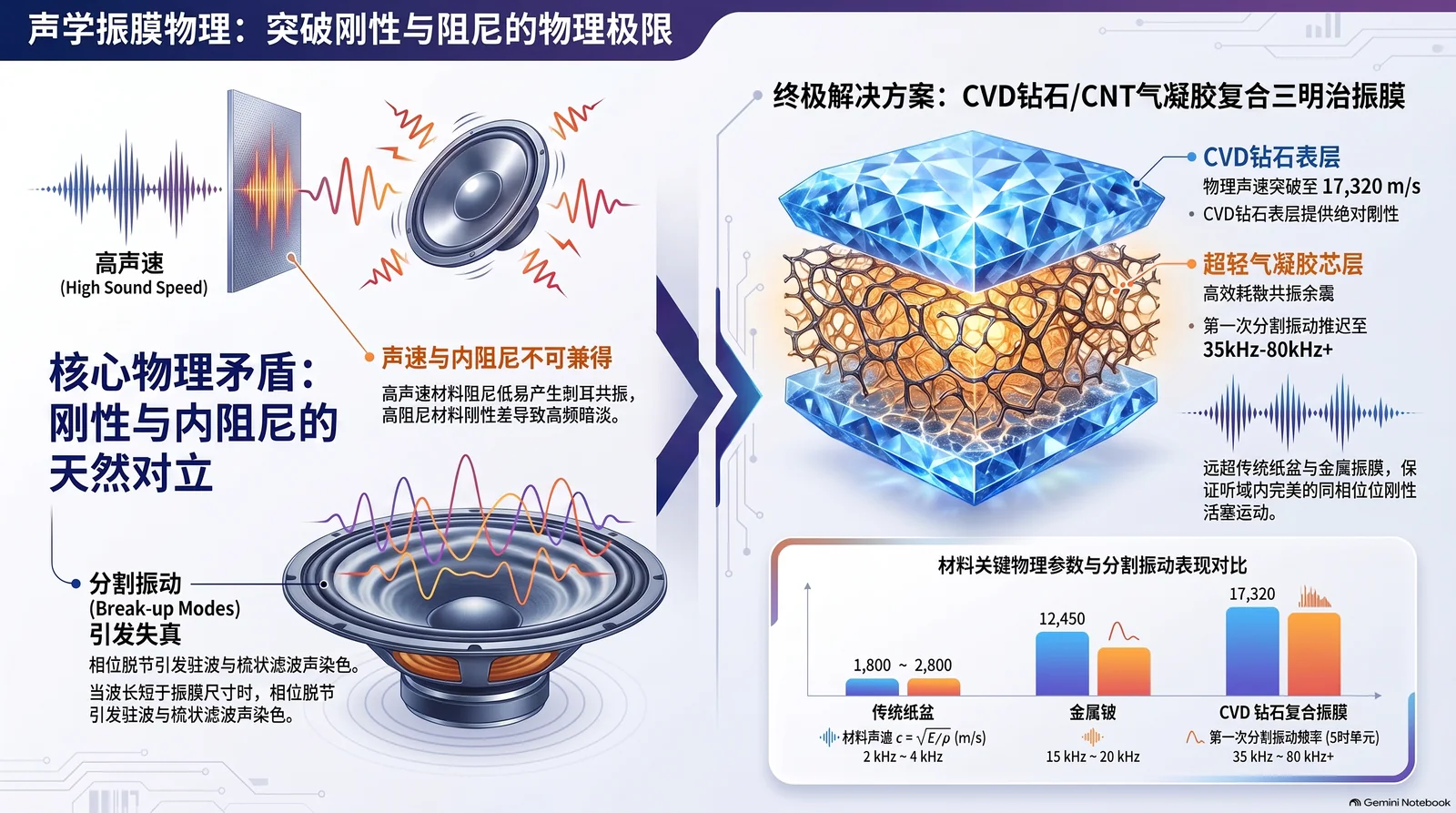
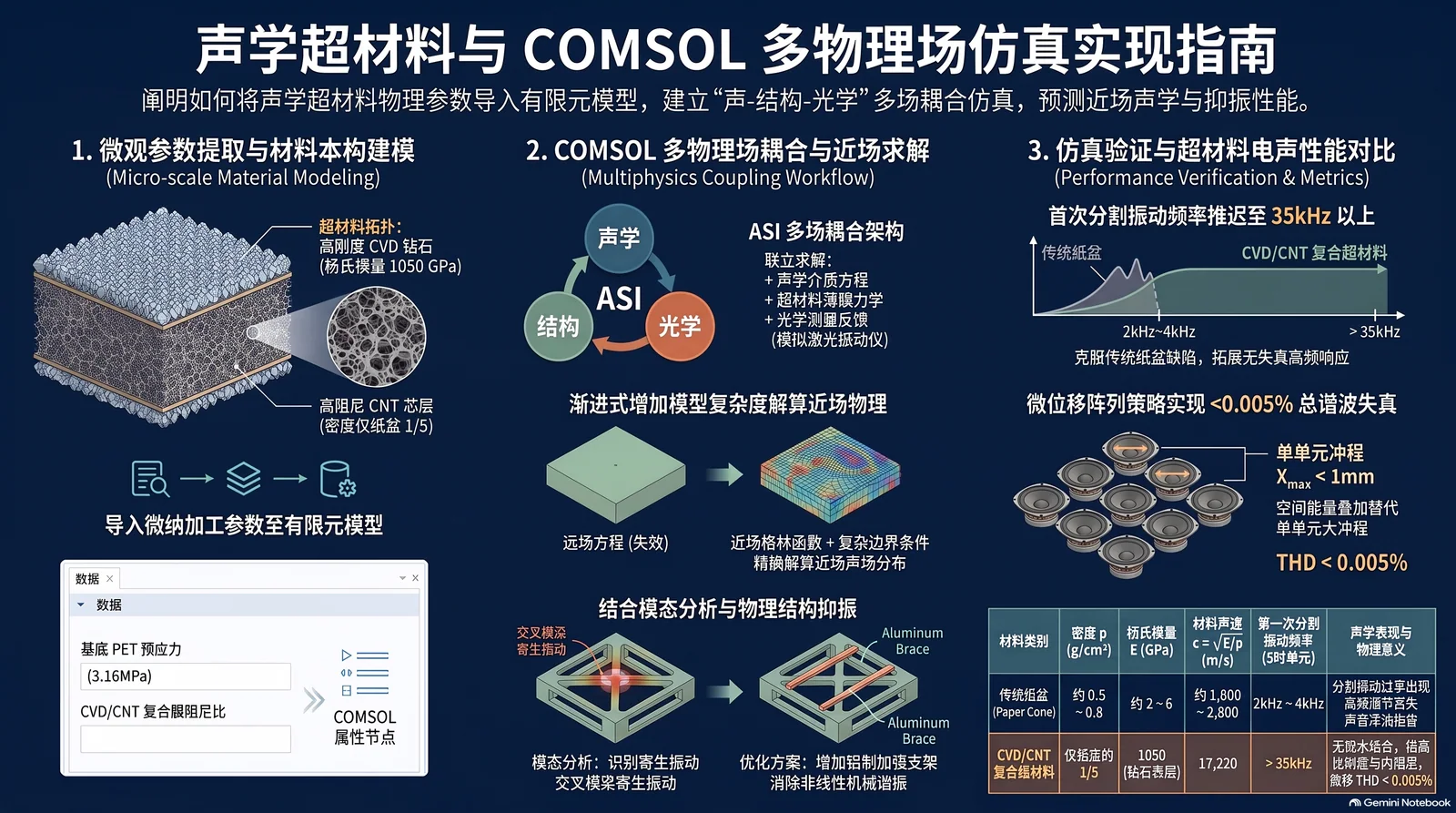
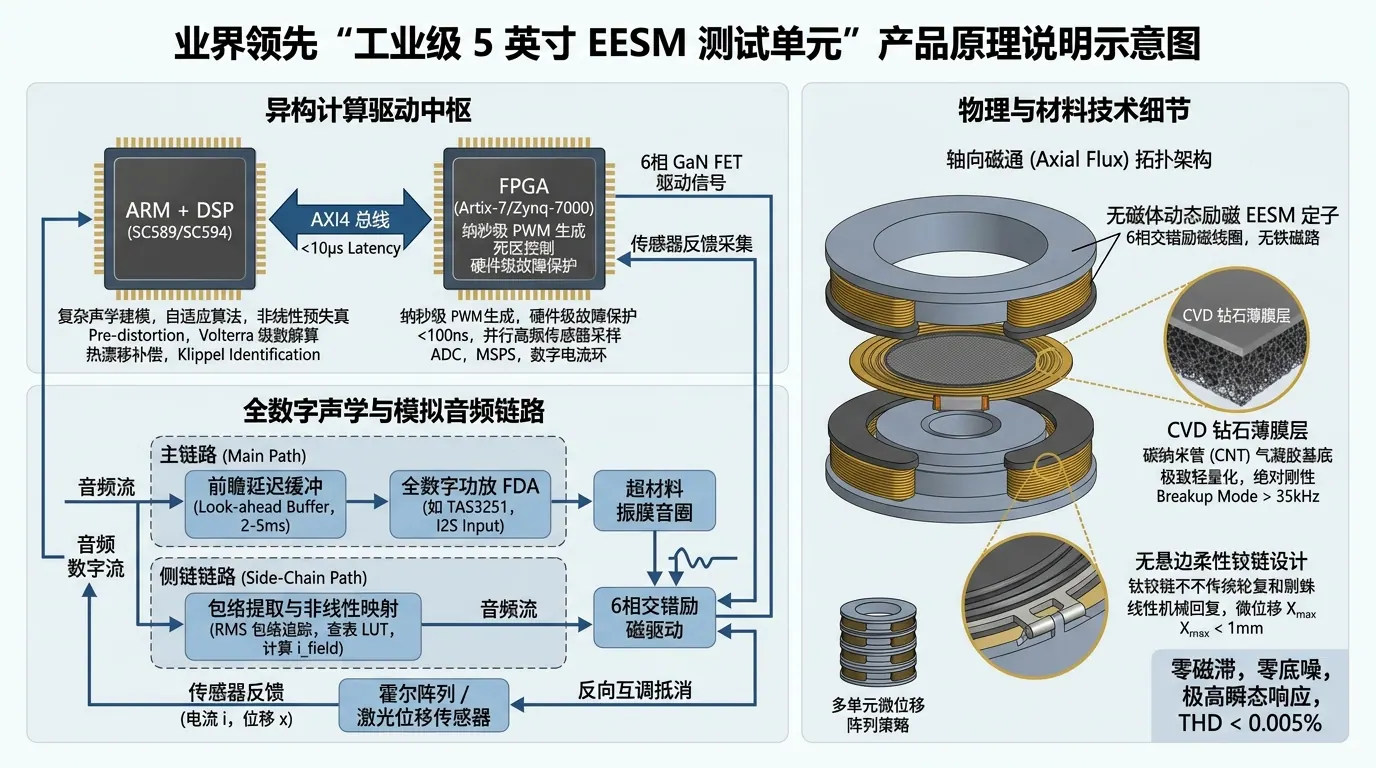
The EESM coaxial transducer is the common building block behind every BitDiamond product. It integrates magnetless Lorentz-force drive and active magnetic levitation into a single 120 mm coaxial module: the voice coil floats inside an actively controlled closed-loop magnetic field, and the diaphragm uses a CVD diamond / CNT airbag-foam composite sandwich structure that pushes the first breakup mode beyond 35 kHz. The diamond outer skin reaches a sound speed of 17,320 m/s and a Young’s modulus of 1050 GPa, providing absolute stiffness, while the ultra-light airbag-foam core has a density only one fifth that of a conventional paper cone. Together they resolve the diaphragm’s physical contradiction — rigidity and internal damping cannot both be had — at the level of materials.
Specifications
- Diaphragm material
- CVD diamond / CNT airbag-foam composite
- Diamond outer-skin sound speed
- 17,320 m/s
- Core layer density
- 1/5 of a conventional paper cone
- First breakup mode
- > 35 kHz
- Total harmonic distortion
- < 0.005%
- Per-driver stroke
- X_max ≤ 1 mm
- Effective radiating diameter
- 125.0 mm
- Acoustic span
- 2 kHz – 100 kHz
Sandwich interlayer
Young’s modulus 1050 GPa
High-damping CNT
Conventional paper cone 2–4 kHz
Micro-displacement array strategy
Spatial energy summation replaces long stroke
Standard 5-inch aperture
Orthogonal frequency decoupling
Design notes
Magnetless Lorentz-force drive
With the permanent-magnet gap removed, drive force is strictly proportional to input current, eliminating magnetic saturation and non-linear harmonics.
Active magnetic levitation
A microsecond-latency feedback loop compensates voice-coil position in real time, so temperature drift and manufacturing tolerances no longer turn into audible distortion.
Composite metamaterial diaphragm
The high stiffness of diamond and the high internal damping of the airbag foam are laminated into one structure, pushing the first breakup mode beyond 35 kHz.
Single-stroke micro-displacement
Long stroke is broken into the spatial energy summation of multiple drivers, buying enough sound pressure at THD < 0.005%.
Engineering diagrams